The Chickpea Atlas

A visual synthesis of chickpea composition, amino-acid distribution, carbohydrate structure, lipid classes, mineral pattern, and cross-legume similarity. Across the full set of figures, chickpeas resolve as a carbohydrate-led legume with meaningful protein, modest fat, and a distinct overall nutritional signature.

Overview

The figures move from broad composition to detailed nutrient classes and then to comparison plots that position chickpea among other legumes in the dataset.

Overview

Overall composition and macronutrient structure

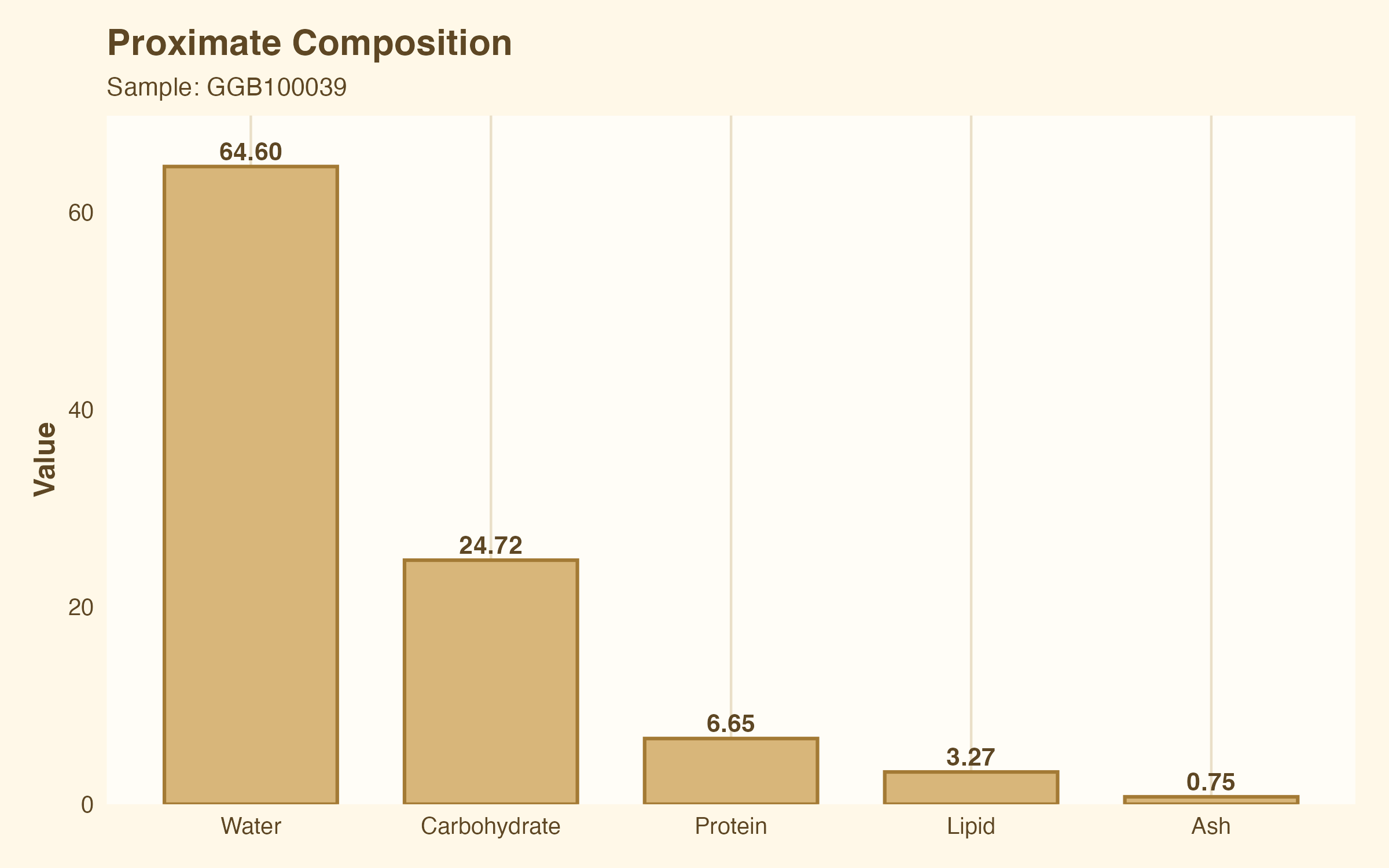
Chickpea appears as a dense, carbohydrate-led legume with a substantial protein fraction and a smaller fat component. The overall profile suggests structural complexity rather than dominance by sugars or lipids. These figures establish the main nutritional architecture before moving into specific nutrient classes.

Primary macro signal
Carbohydrate

The largest share of the chickpea profile is associated with carbohydrates, especially the more structural fractions.

Secondary macro signal
Protein

Protein is not incidental in the profile and contributes materially to the identity of the food.

Fat contribution
Modest

Lipids are present but occupy a smaller share of the total composition than carbohydrate or protein.

Whole-food pattern
Balanced

The combined signal is coherent and stable rather than centered on a single extreme nutrient feature.

Structural interpretation

The proximate composition view defines the main proportions of the chickpea matrix. It shows that the food is organized around a large carbohydrate base, reinforced by a notable protein fraction and a smaller lipid share.

This overall structure is consistent with chickpea functioning as a staple legume: substantial, compositionally dense, and suitable for use as both a protein source and a structured carbohydrate source.

Key point: chickpea is defined more by structural macronutrients than by sugars or fat.
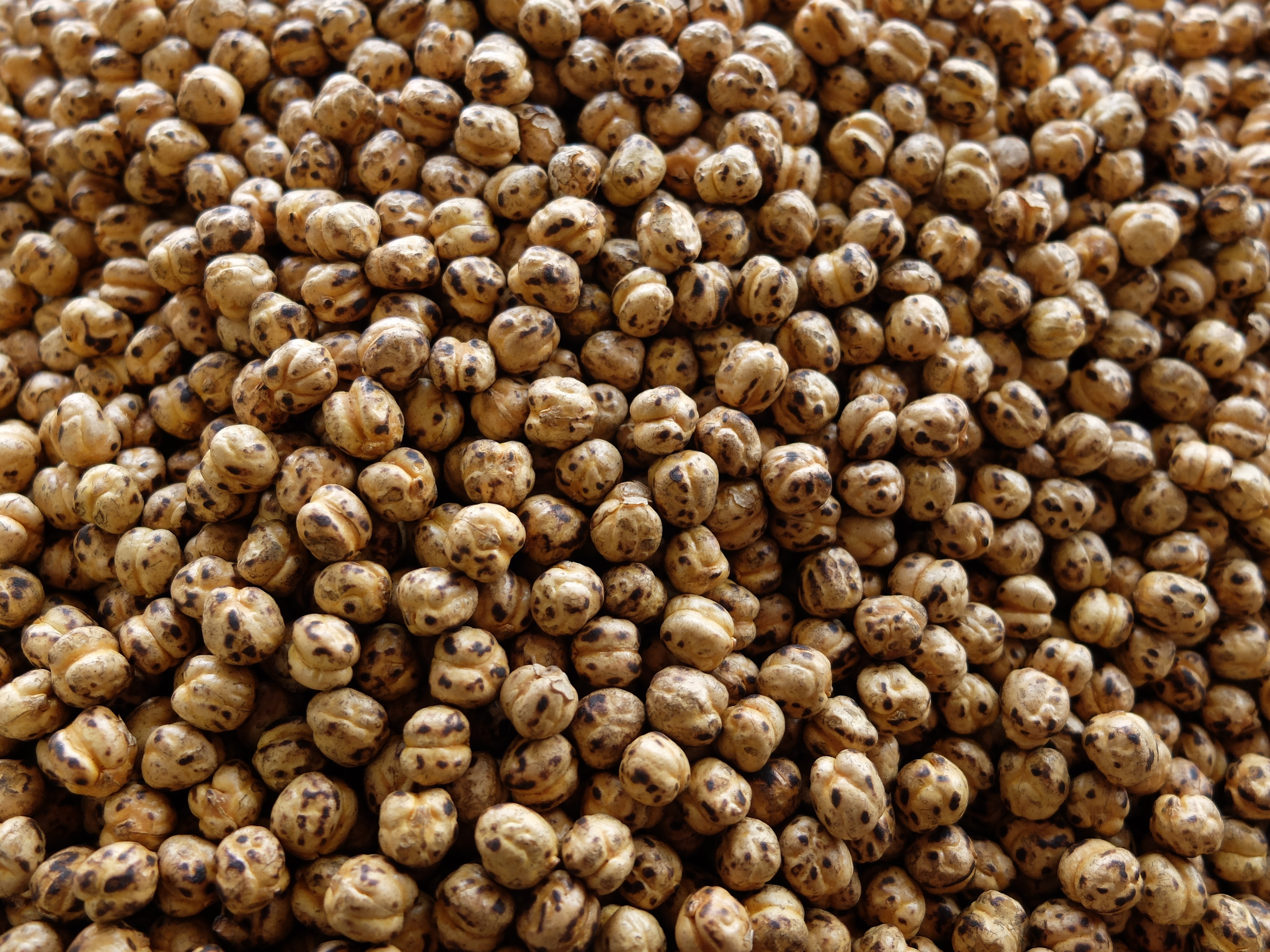
Chickpea picture
Image not found.
Place roasted-chickpea2.jpg in the same folder as this HTML file.
Click to enlarge Macronutrient donut plot for chickpeas
Image not found.
Place macro_donut.png in the same folder as this HTML file.
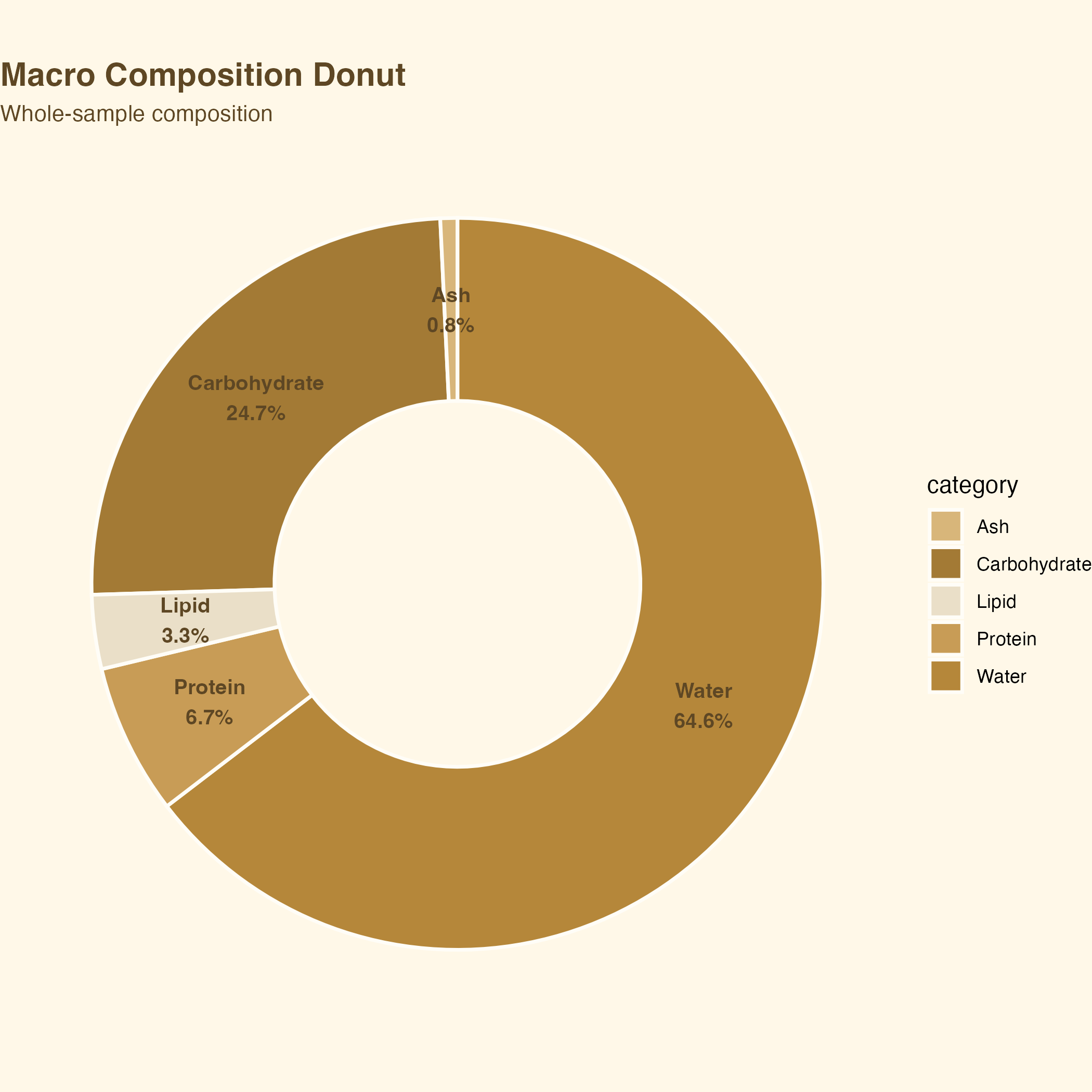
Figure 2. Macronutrient donut

The macronutrient donut condenses the broad macro balance into a single view, highlighting the relative dominance of carbohydrate, the meaningful contribution of protein, and the smaller role of fat.

Click to enlarge Fingerprint heatmap for chickpeas
Image not found.
Place fingerprint_heatmap.png in the same folder as this HTML file.
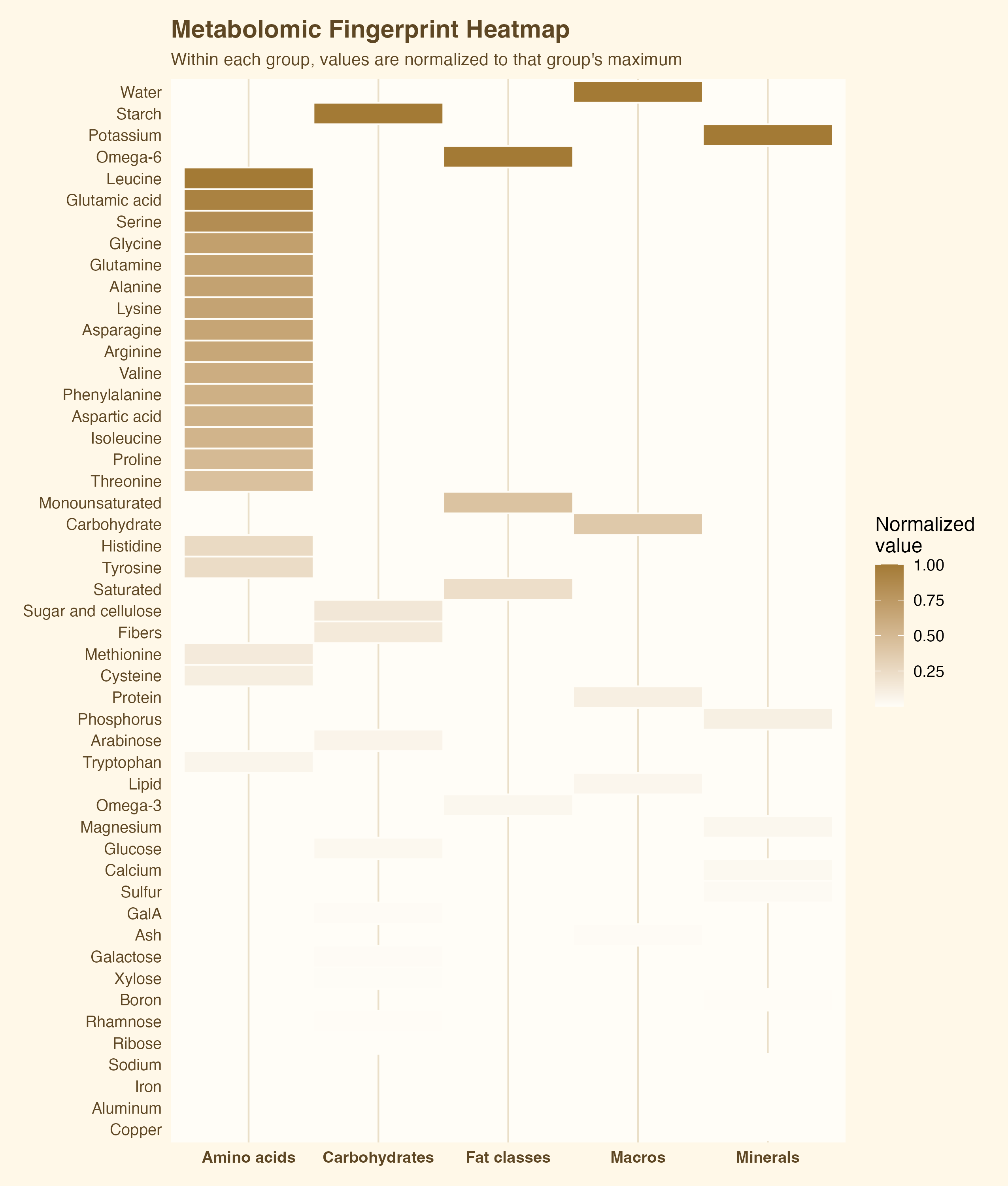
Figure 3. Fingerprint heatmap

The heatmap presents the broader nutrient pattern of chickpea as a single visual fingerprint, showing which parts of the profile are relatively stronger or weaker across the measured variables.

Map

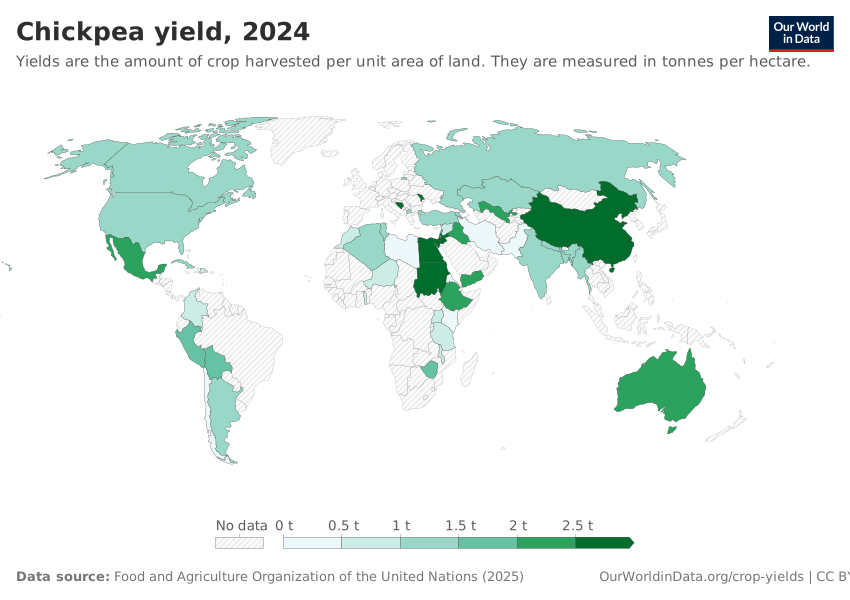
Geographic Distribution

Geographic Distribution Profile Interpretation

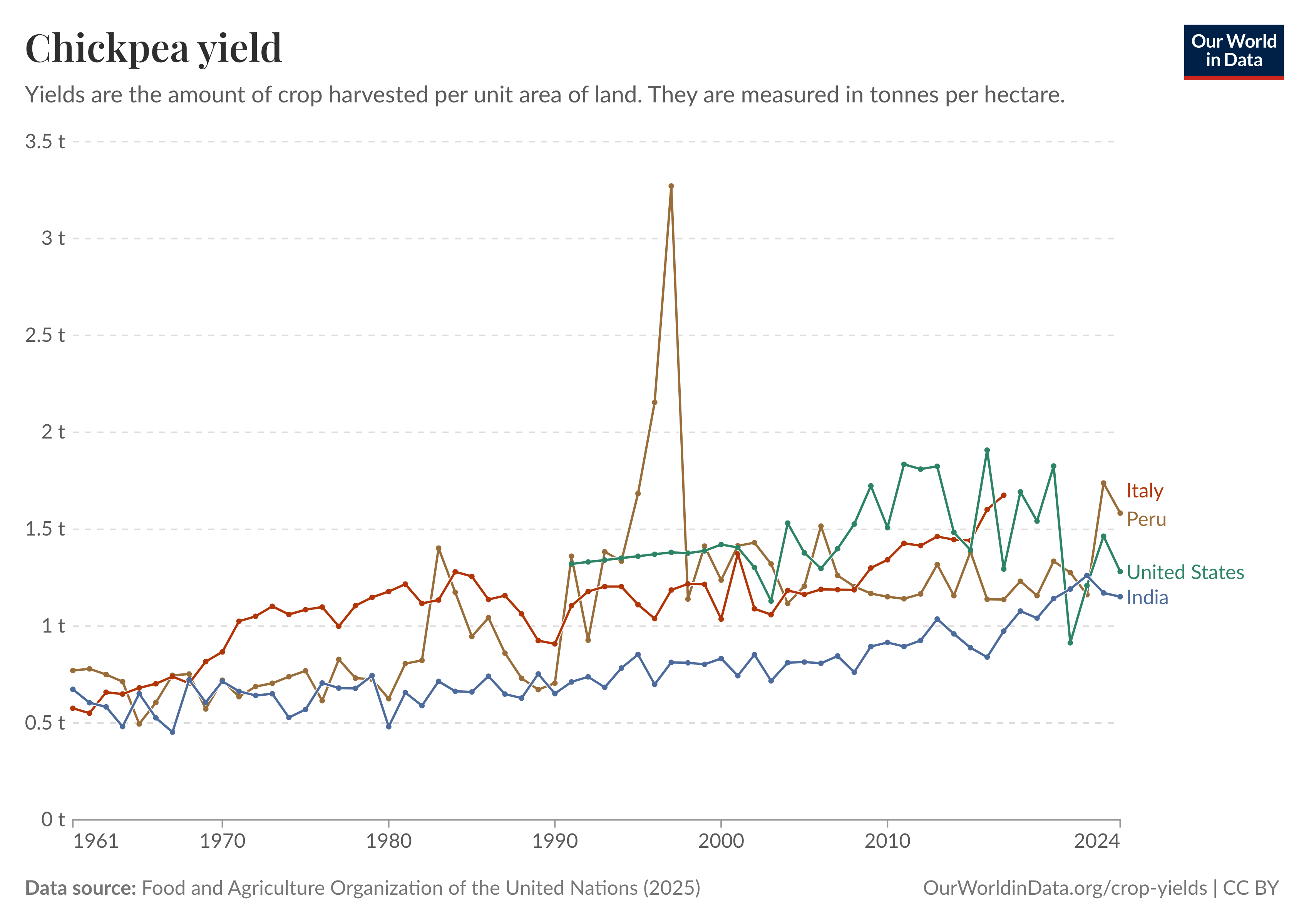
Both the map and the line graph show that chickpea production is globally distributed rather than being concentrated in a single region. Although, there are certain countries and regions with much higher production of chickpeas.

The overall pattern is one of broad cultivation across multiple continents and climates. This suggests that chickpea is a versatile crop that can be grown in a variety of conditions, contributing to its status as a staple legume in many parts of the world.

Key point: Chickpeas are cultivated in a wide range of geographic regions.
Roasted chickpea
Click to enlarge chickpea yield for the top four producing countries
Image not found.
Place chickpea-yield.png in the same folder as this HTML file.
Figure 5. Yield line graph

This figure shows the top four chickpea-producing countries since 1961, Italy, Peru, United States, and India, and their production trends from 1961 to 2024, highlighting the growth patterns and relative contributions of each country to global production of chickpeas.

Protein and amino acids

Amino-acid pattern and protein character

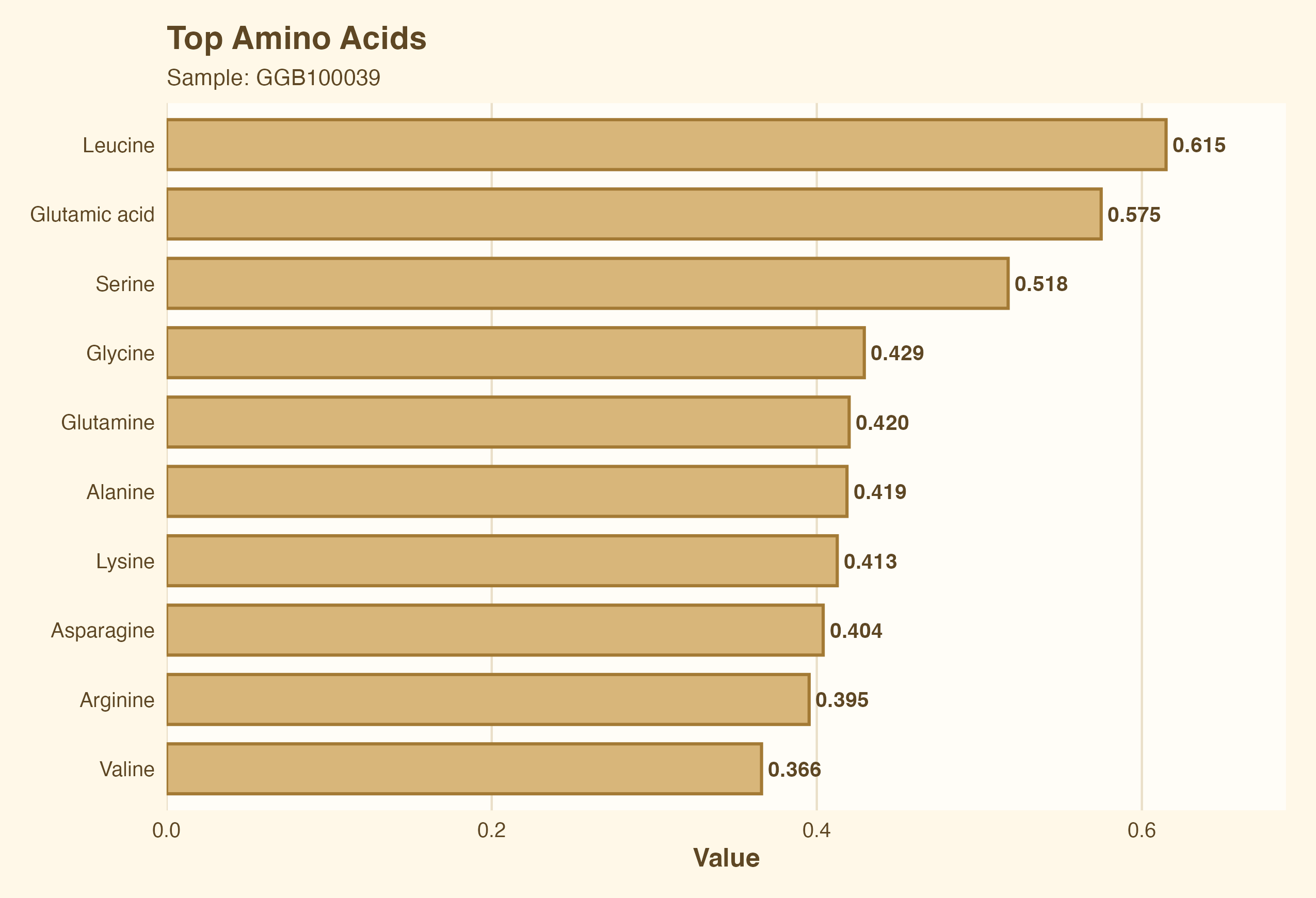
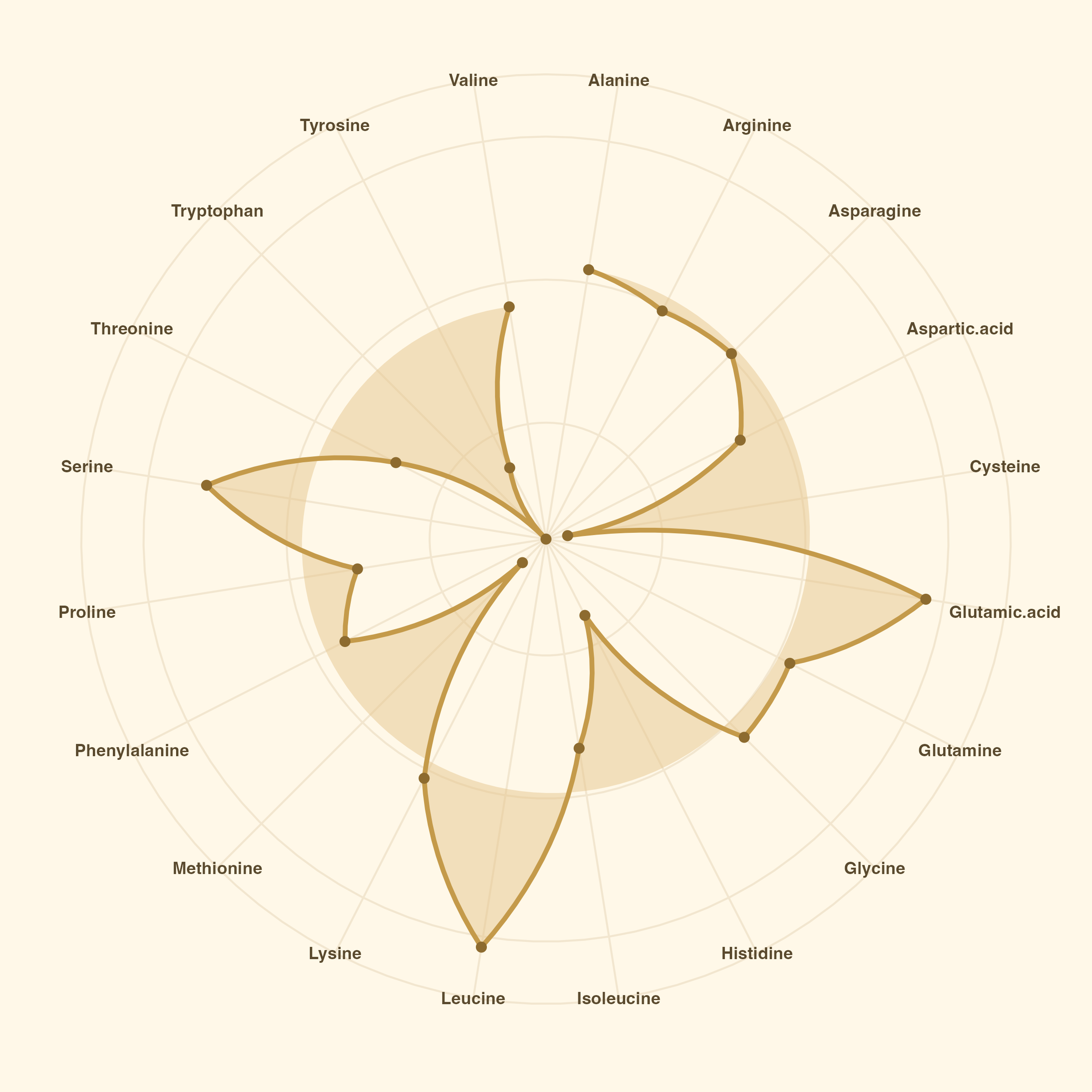
Total protein explains only part of the chickpea protein story. The amino-acid figures add shape to that number by showing where the profile is broad, where it is concentrated, and how the internal composition of the protein fraction is distributed across individual amino acids.

Protein profile interpretation

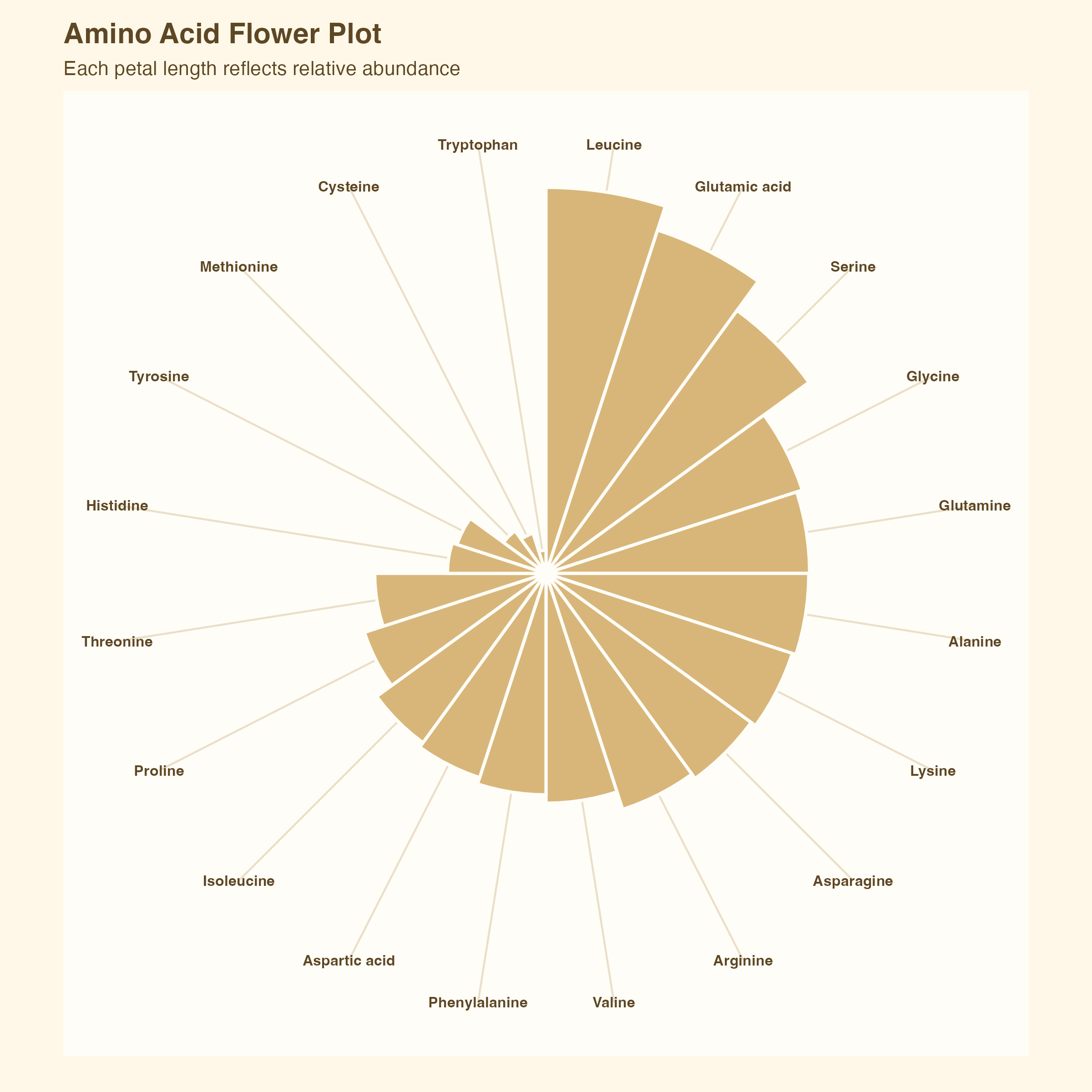
The amino-acid plots show that chickpea protein is not compositionally flat. Instead, it has a structured pattern with clear peaks and smaller components. This gives the protein fraction a distinct internal signature rather than appearing as an undifferentiated total value.

Reading the profile as a pattern is more informative than reading it as a single quantity, because it reveals how the protein component is assembled within the whole food.

Key point: chickpea contains a broad, structured amino-acid profile rather than a uniform one.
Roasted chickpea
Image not found.
Place roasted-chickpea.jpg in the same folder as this HTML file.
Click to enlarge Amino acid radar plot for chickpeas
Image not found.
Place amino_acid_radar.png in the same folder as this HTML file.
Figure 5. Amino acid radar

The radar view emphasizes overall profile geometry and is useful for assessing the breadth and balance of the amino-acid pattern at a glance.

Click to enlarge Amino flower plot for chickpeas
Image not found.
Place amino_flower_plot.png in the same folder as this HTML file.
Figure 6. Amino flower plot

The flower plot expresses the amino-acid distribution as a visual shape, making the internal structure of the protein profile easier to compare across the components.

Carbohydrates

Carbohydrate structure and distribution

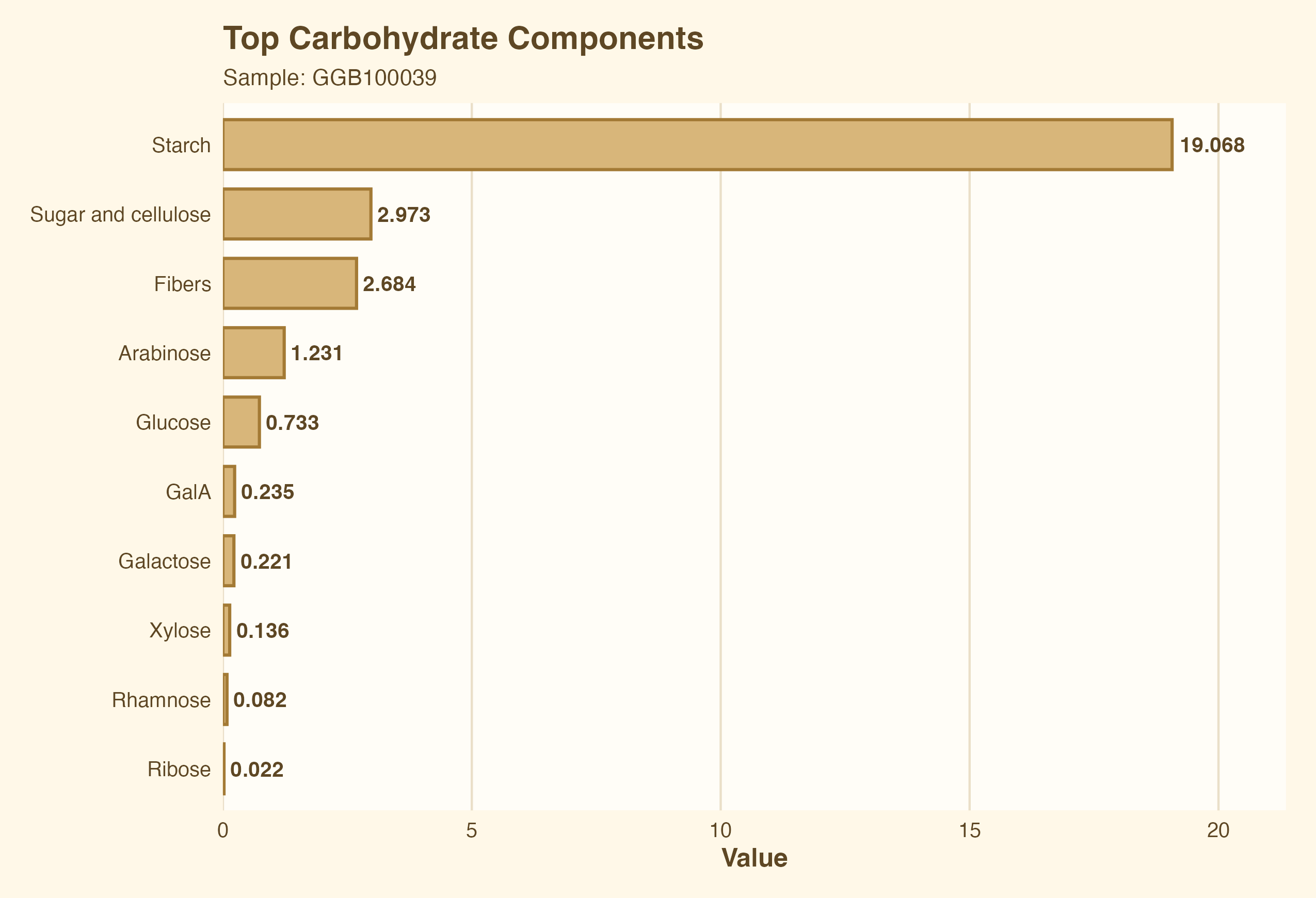
The carbohydrate fraction of chickpea is not a single homogeneous category. The figures in this section separate starch, fiber, and smaller carbohydrate fractions to show how the carbohydrate signal is assembled and why chickpea behaves as a structured carbohydrate source rather than a sugar-led one.

Carbohydrate interpretation

The carbohydrate profile indicates that chickpea is dominated by structured fractions rather than by a simple sugar signal. This explains why its composition is better described in terms of starch and matrix-building carbohydrates.

The result is a profile consistent with a legume used for body, texture, and sustained nutritional contribution rather than sweetness or rapidly absorbed carbohydrate alone.

Key point: the carbohydrate story is primarily a starch-and-fiber story.
Chickpea picture
Image not found.
Place chickpea_seed.jpg in the same folder as this HTML file.
Fat and lipid classes

Lipid composition and class distribution

Although chickpea is not dominated by fat, its lipid fraction still has internal structure. The plots in this section distinguish between lipid classes and show how the small total fat share is divided across the underlying fatty-acid groups.

Lipid interpretation

The lipid profile adds nuance to the broad composition view. Rather than treating fat as a single total value, these figures show how that fraction is internally partitioned and whether the signal is concentrated in unsaturated, saturated, or mixed classes.

This section therefore contributes compositional detail even though the absolute fat share is modest within the whole food.

Key point: the fat fraction is small, but its class distribution remains informative.
Chickpea picture
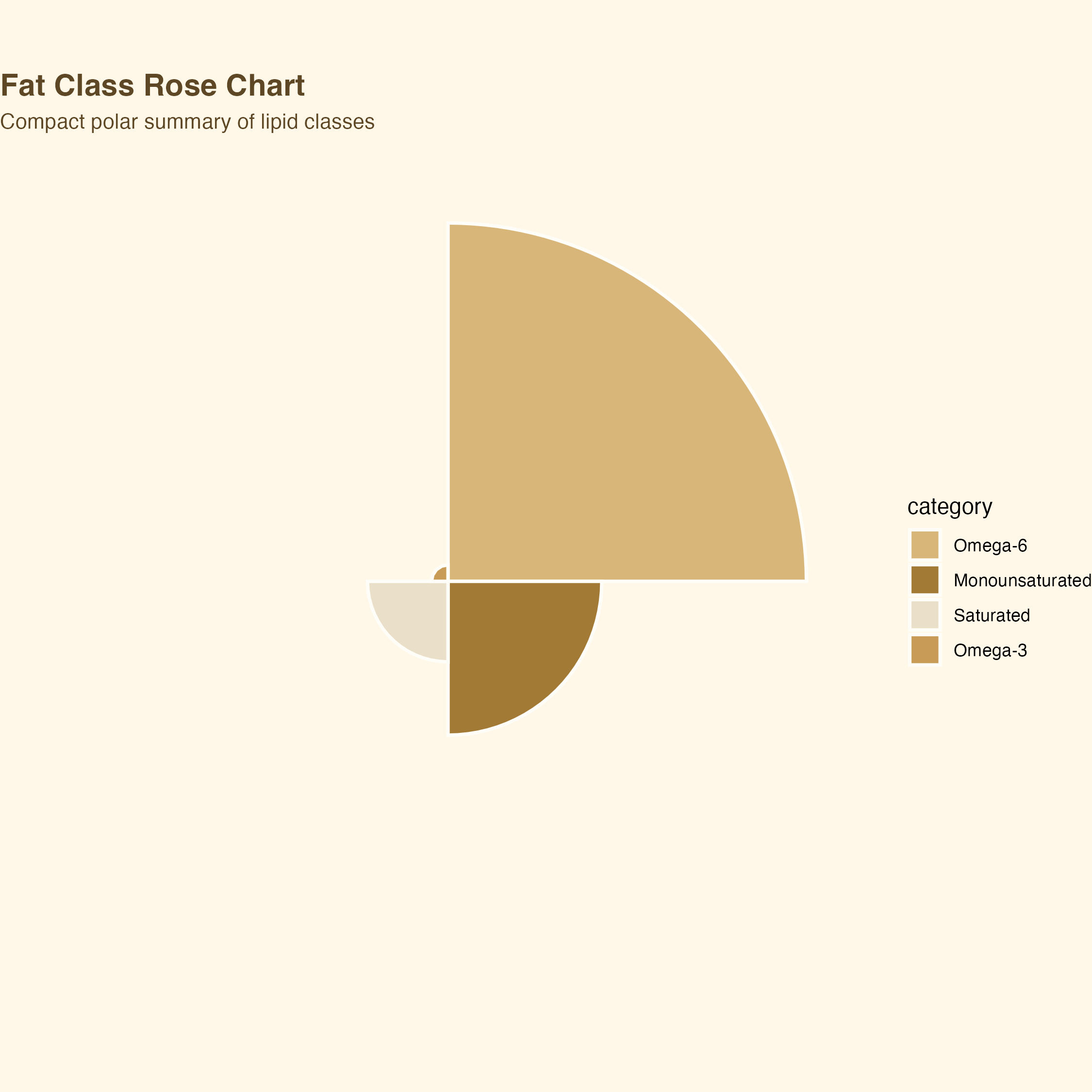
Click to enlarge Fat rose chart for chickpeas
Image not found.
Place fat_rose_chart.png in the same folder as this HTML file.
Figure 8. Fat rose chart

The rose chart turns the lipid pattern into a radial form that emphasizes relative prominence across the fat classes.

Minerals

Mineral pattern within the broader fingerprint

The mineral plots add finer-resolution detail to the chickpea profile. They show whether the mineral signal is spread across many components or concentrated more heavily in a smaller subset, contributing an additional layer to the whole-food picture.

Click to enlarge Mineral profile for chickpeas
Image not found.
Place mineral_profile.png in the same folder as this HTML file.
Figure 9. Mineral profile

This figure provides the main detailed view of the mineral distribution measured in chickpea.

Click to enlarge Mineral bubble strip for chickpeas
Image not found.
Place mineral_bubble_strip.png in the same folder as this HTML file.
Figure 10. Mineral bubble strip

The bubble-strip format emphasizes relative magnitude and makes the mineral distribution easy to scan visually.

Whole-food signature

Integrated profile across the full nutrient space

Not all of the chickpea signal is best understood through isolated nutrient classes. Some figures summarize the full pattern directly and make it possible to interpret chickpea as a single integrated food profile rather than a list of parts.

Integrated interpretation

Summary figures are useful because they synthesize the information from the earlier sections into a single coherent shape. Instead of requiring separate interpretation of protein, carbohydrate, lipid, and mineral plots, they show the collective structure of the food in one view.

In this dataset, chickpea retains a recognizable signature even when many variables are combined, indicating that its overall profile is distinct rather than diffuse.

Key point: chickpea remains identifiable when the full nutrient profile is viewed as a whole.
Chickpea picture
Image not found.
Place chickpea.jpg in the same folder as this HTML file.
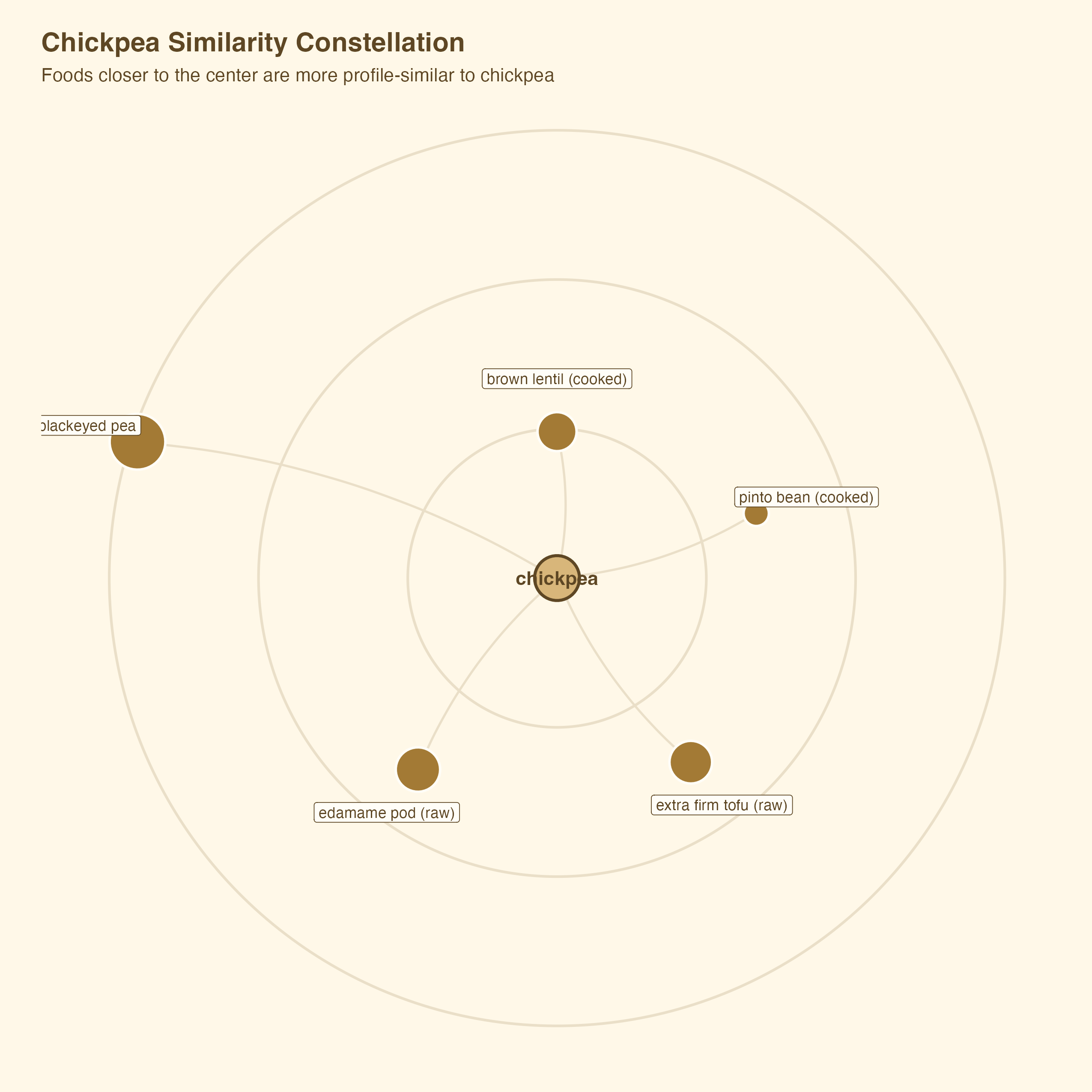
Where chickpea sits among the other samples

Relative position across the main composition measures

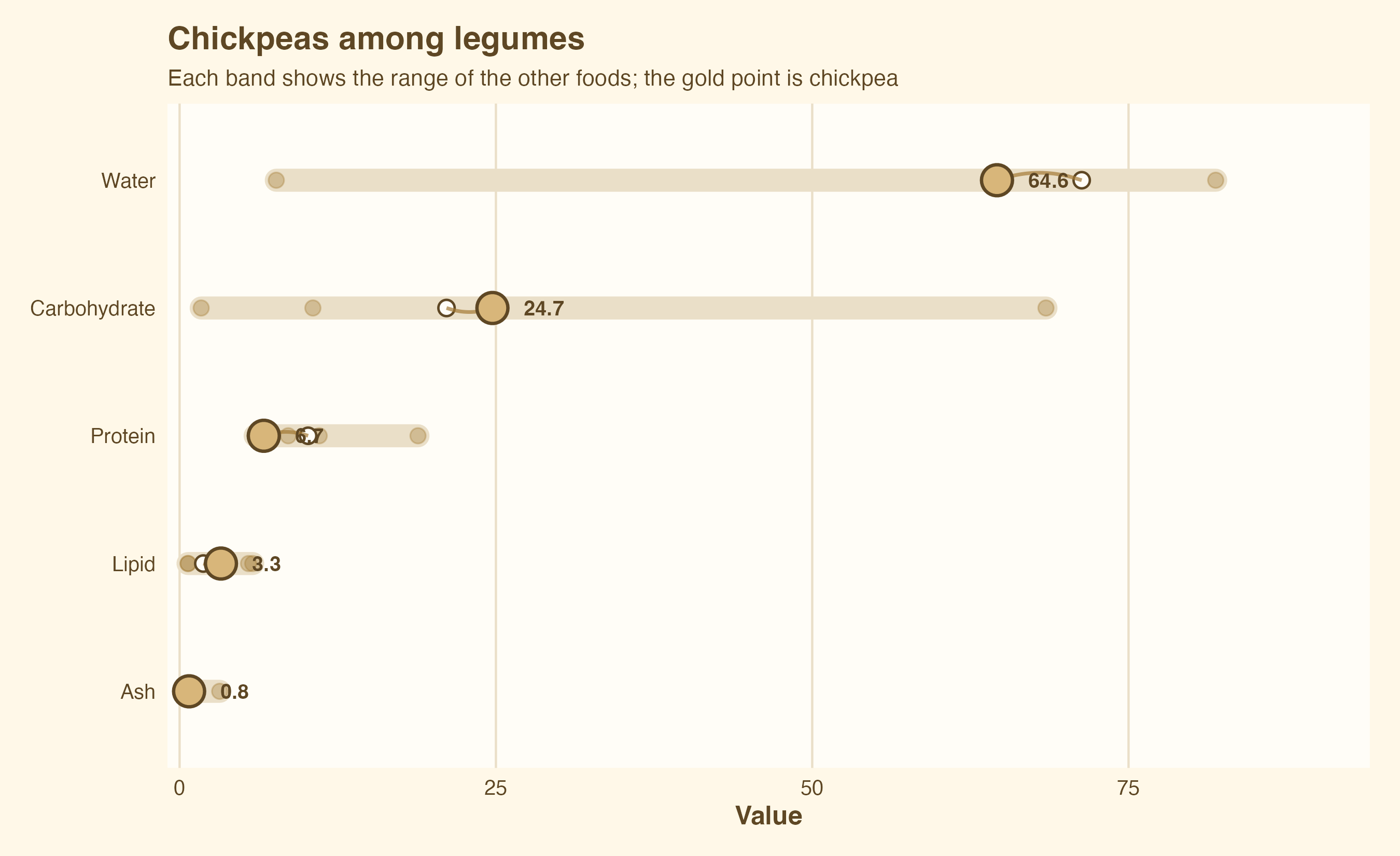
These comparisons show where chickpea lands on total carbohydrate, protein, total fat, and fiber relative to the other sampled foods.

Total carbohydrate Ranked 2 of 6
blackeyed pea
68.48
chickpea
24.72
brown lentil (cooked)
24.62
pinto bean (cooked)
21.10
edamame pod (raw)
10.53
extra firm tofu (raw)
1.71
Protein Ranked 5 of 6
blackeyed pea
18.84
edamame pod (raw)
11.03
extra firm tofu (raw)
10.16
brown lentil (cooked)
8.59
chickpea
6.65
pinto bean (cooked)
5.97
Total fat Ranked 3 of 6
edamame pod (raw)
5.78
extra firm tofu (raw)
5.45
chickpea
3.27
blackeyed pea
1.87
pinto bean (cooked)
0.68
brown lentil (cooked)
0.66
Fiber Ranked 3 of 6
blackeyed pea
6.91
pinto bean (cooked)
2.93
chickpea
2.68
edamame pod (raw)
2.47
brown lentil (cooked)
2.25
extra firm tofu (raw)
0.60
Comparison with other legumes

Position of chickpea among the other samples

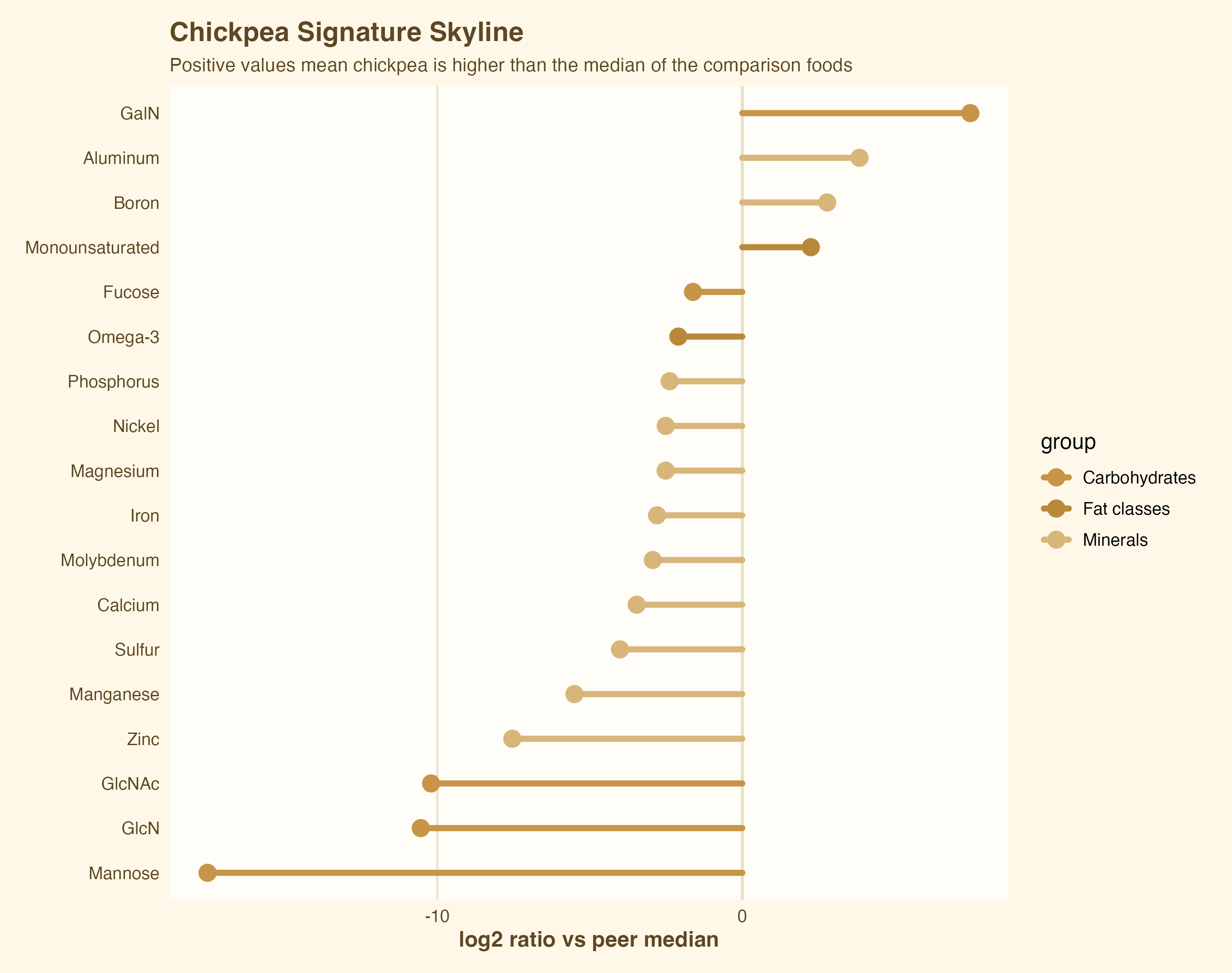
The figures are interpreted here as targeted comparison plots. They are shown at larger size to make the cross-sample structure easier to read and to highlight where chickpea sits relative to the rest of the legume set.

Comparative interpretation: these figures are most useful for showing relative position and similarity, not for reducing the dataset to a single ranking.
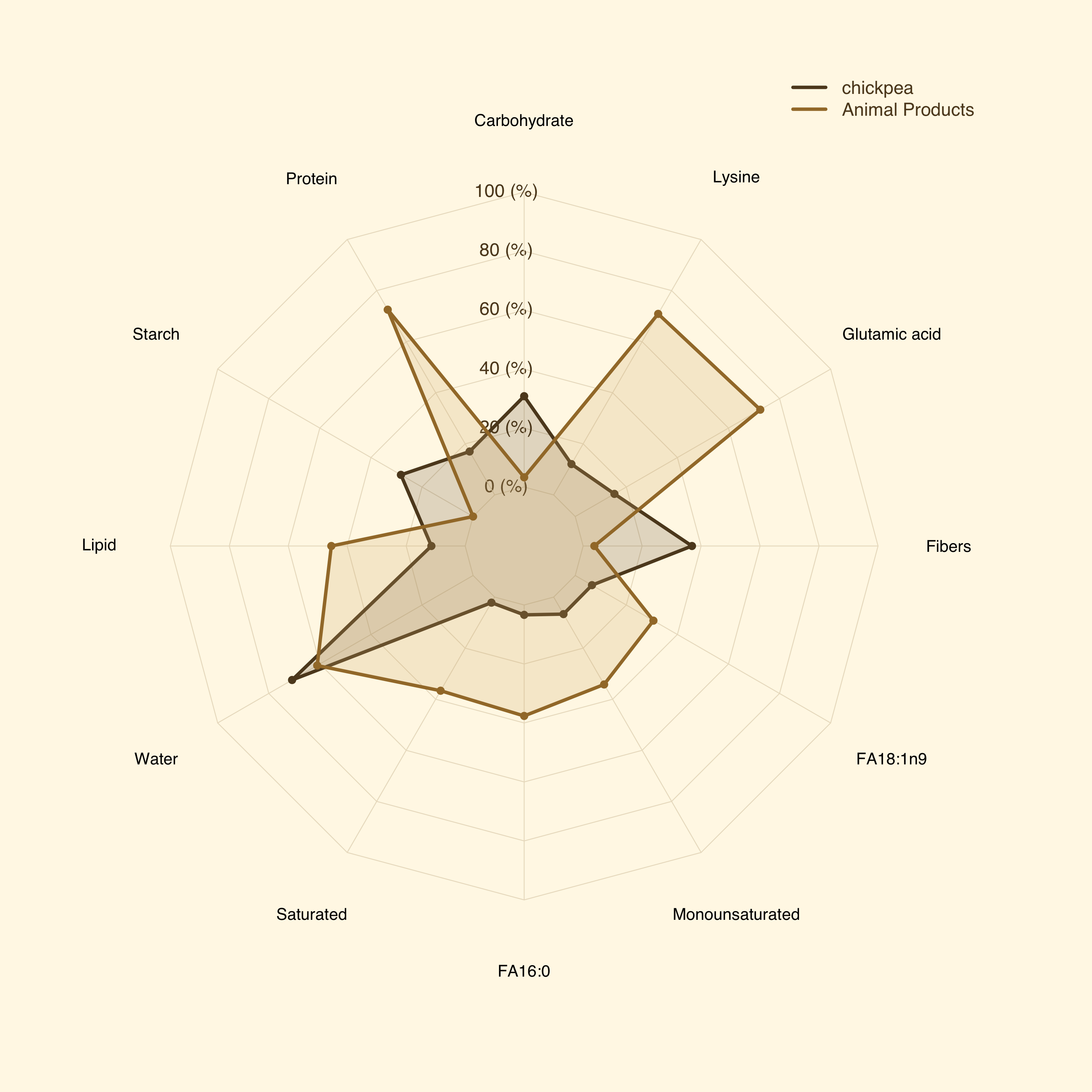
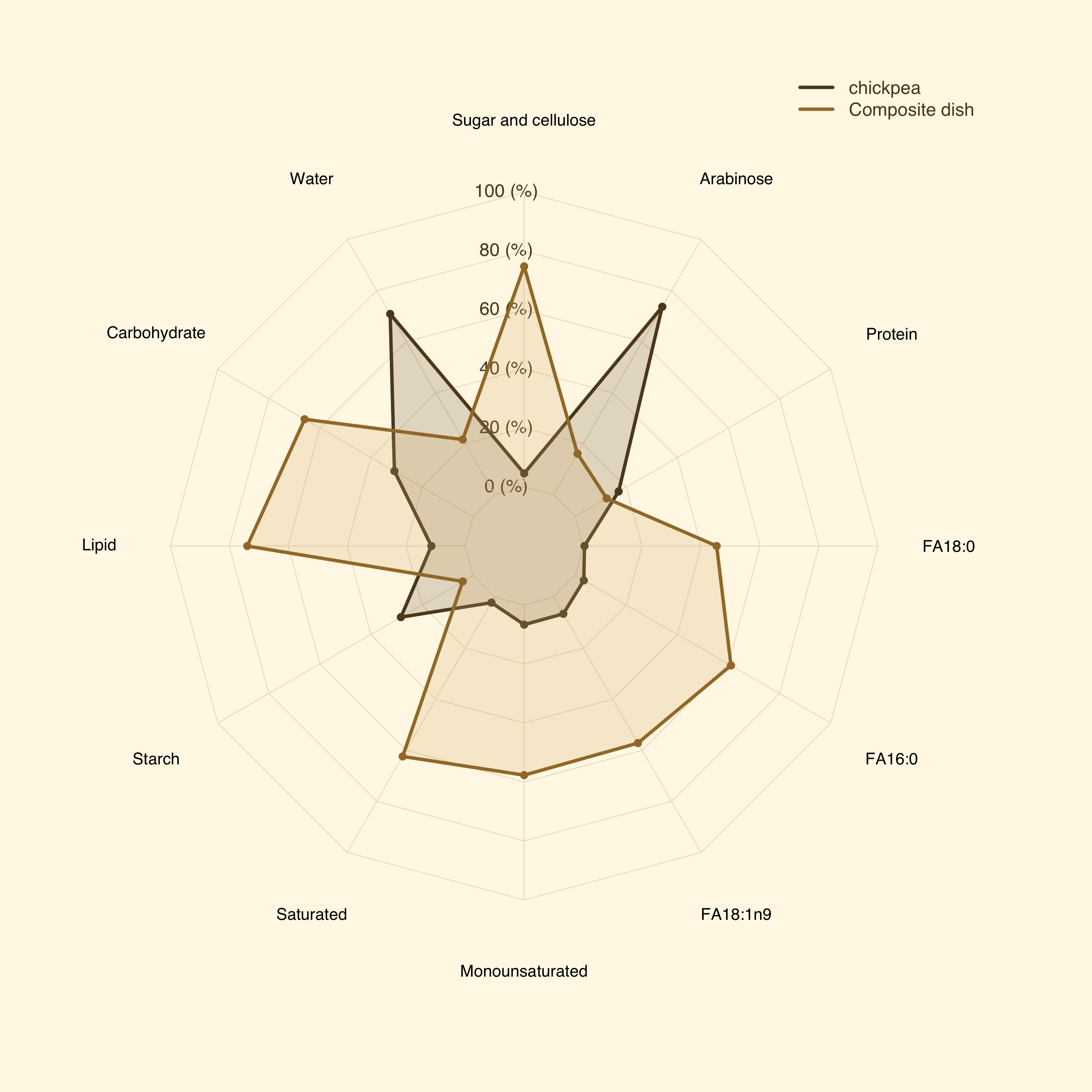
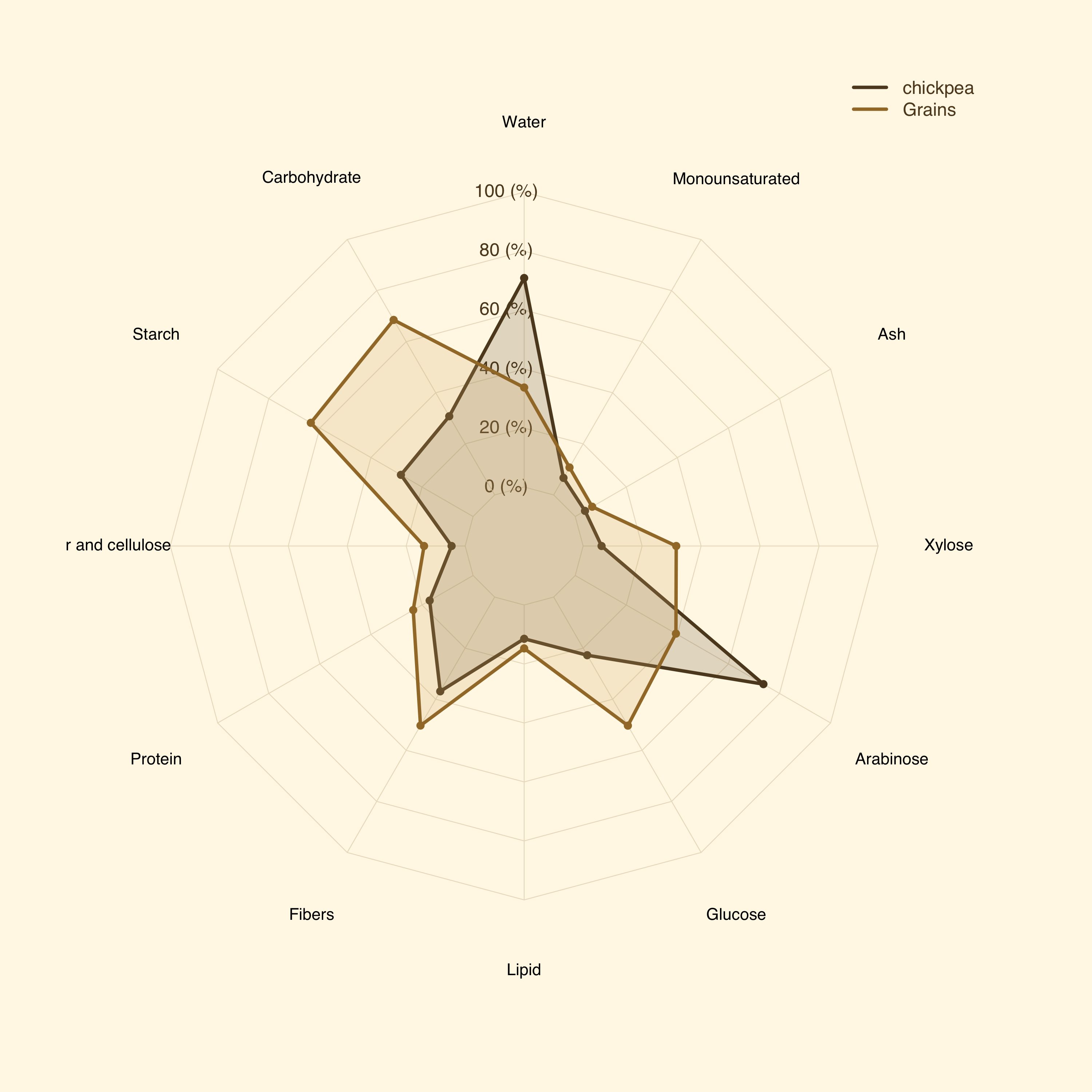
Category radar comparisons: these radar plots extend the comparison view beyond legumes and show how chickpea aligns with broader food categories across matched nutritional dimensions.
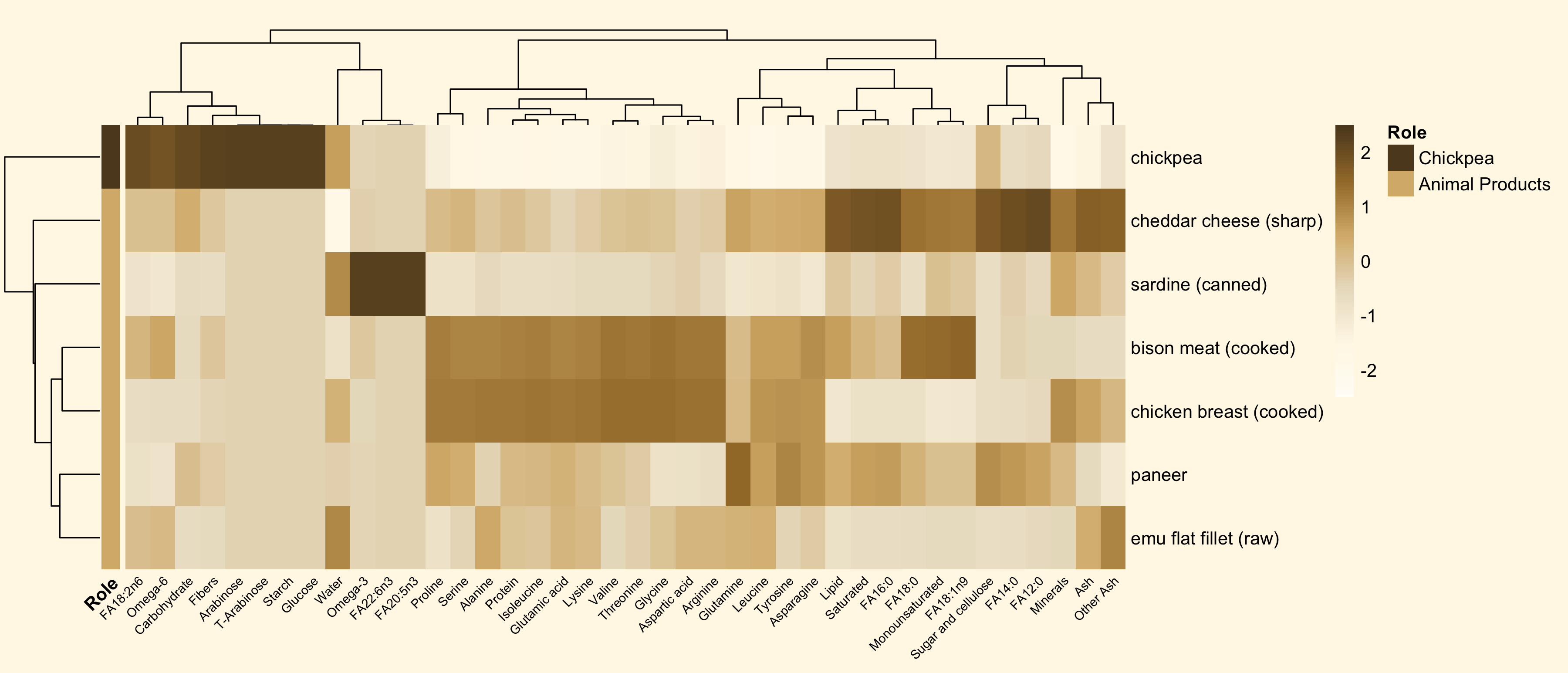
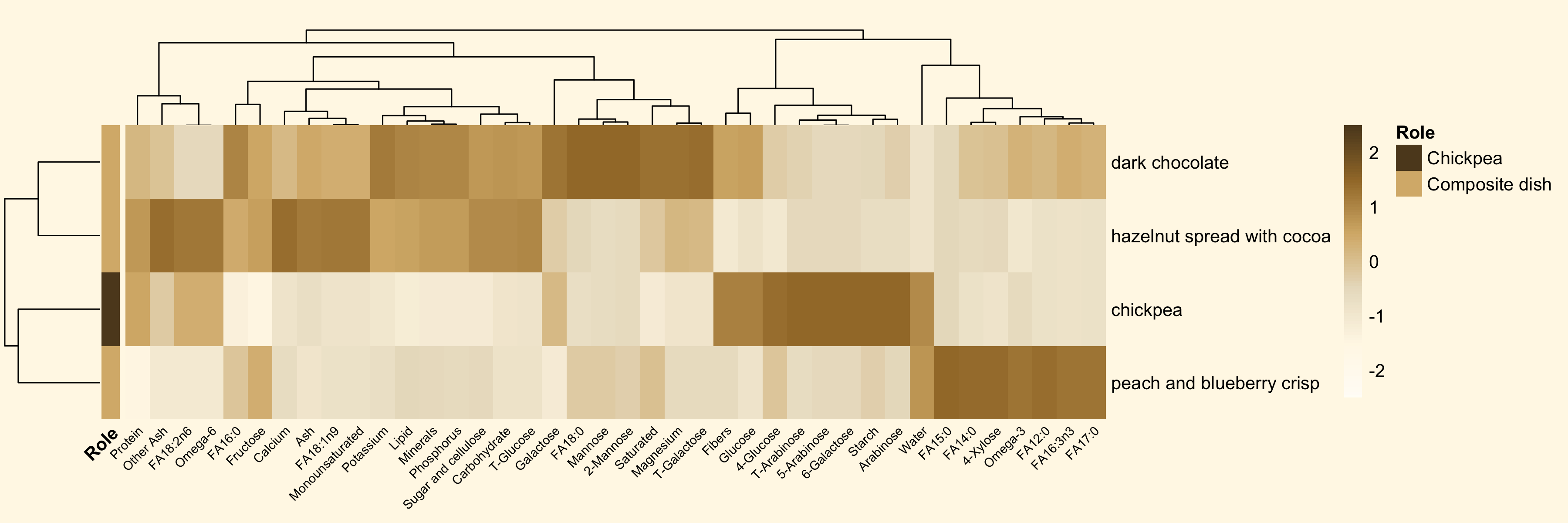
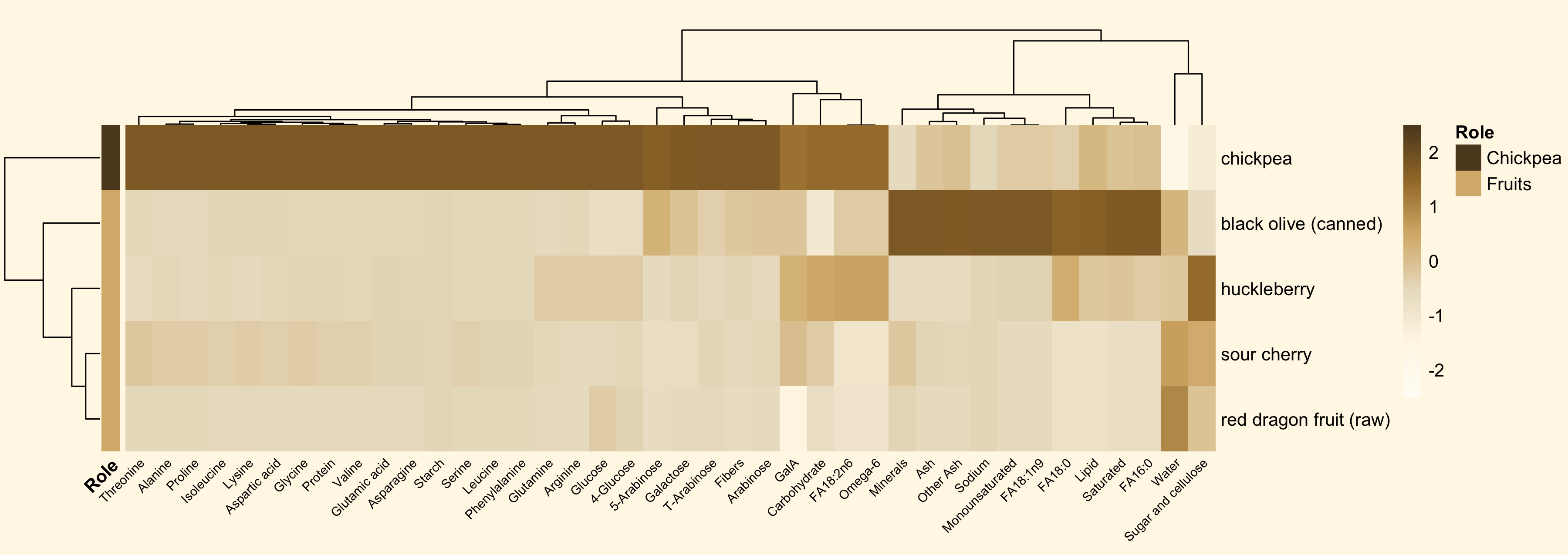
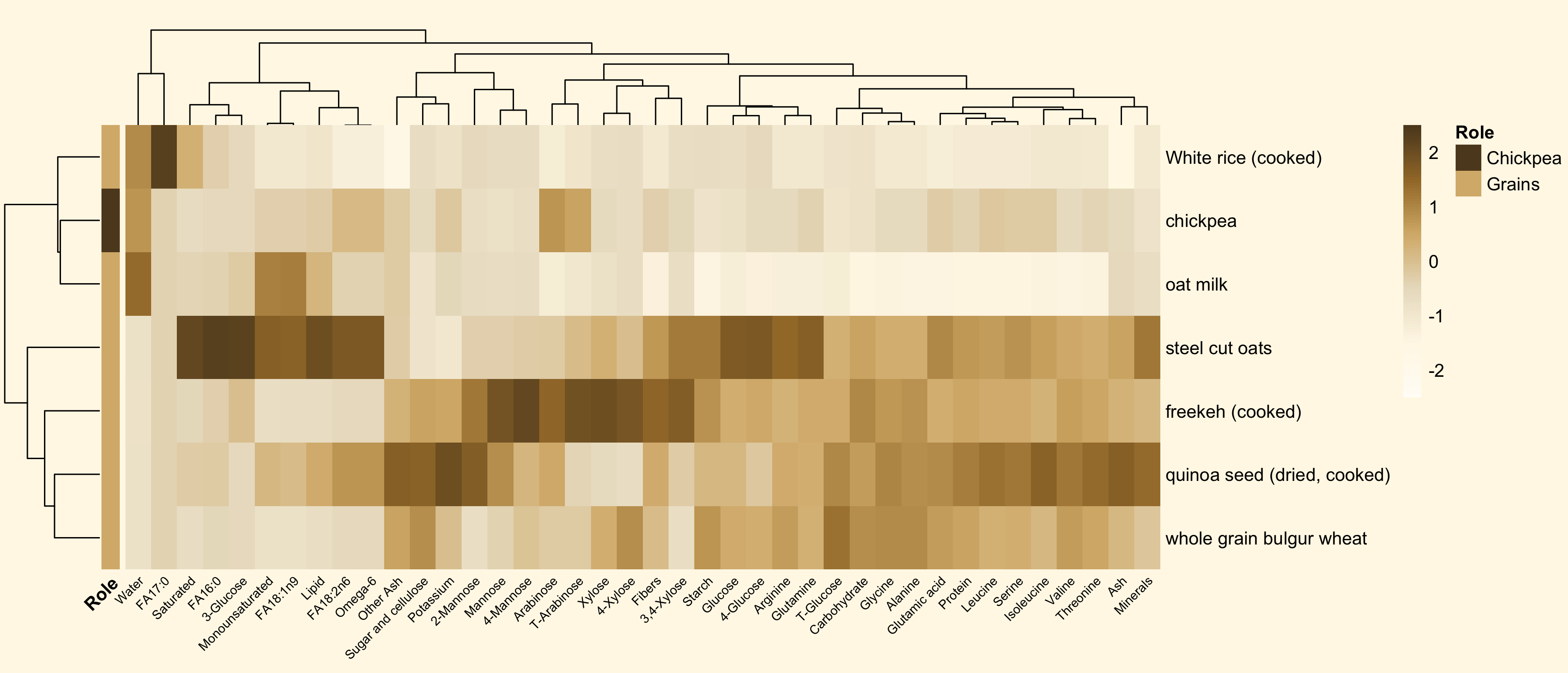
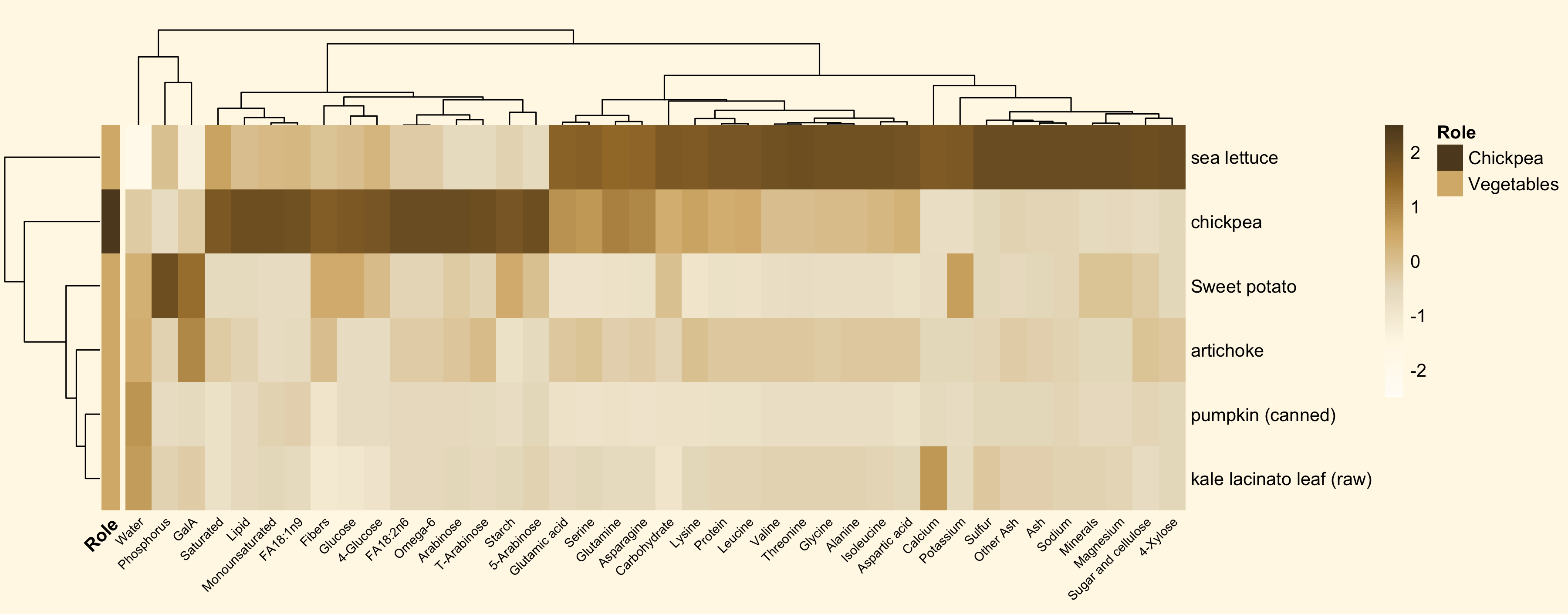
Category heatmap comparisons: these heatmaps compare chickpea with broader food groups across the top nutrient dimensions, making it easier to see which variables most strongly separate chickpea from each category.
Takeaways

Summary of the chickpea profile

Across the full dashboard, chickpea is characterized by a strong carbohydrate base, a meaningful protein fraction, modest fat, and a stable whole-food signature. The profile is structured rather than diffuse, and the comparison plots show that chickpea occupies a distinct position among the other legumes.

Macronutrient identity

Chickpea is primarily carbohydrate-led, with protein contributing substantially and fat remaining secondary.

Internal composition

The nutrient classes are not uniform totals; each shows an internal structure that contributes to the overall signature.

Comparative position

Relative to the other legumes, chickpea remains compositionally recognizable across both macro and amino-acid comparisons.